

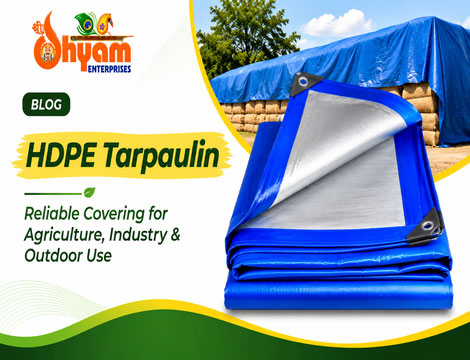
HDPE Tarpaulin: Benefits, Uses and How to Choose the Right Tarpaulin Sheet
HDPE tarpaulin sheets are widely used in agriculture, industries, construction and transportation for covering and protecting materials. Learn about their benefits, applications and important factors to consider when choosing the right tarpaulin sheet.
HDPE Tarpaulin: Benefits, Uses and How to Choose the Right Tarpaulin Sheet
Protecting goods, agricultural materials and outdoor spaces from changing weather conditions is important for both businesses and individuals. Whether it is covering agricultural products, protecting construction materials or storing industrial goods, having a reliable covering solution makes a big difference. This is where HDPE tarpaulin sheets become useful.
HDPE tarpaulins are manufactured using High-Density Polyethylene (HDPE) woven fabric, generally combined with LDPE lamination to provide a protective covering. They are commonly used because of their lightweight structure, flexibility and suitability for different outdoor and industrial applications.
At Shri Shyam Enterprises, we understand the importance of practical and reliable covering materials. Based in Vapi, Gujarat, we deal in tarpaulins and agricultural packaging solutions designed for different commercial, industrial and agricultural requirements.
What Is HDPE Tarpaulin?
HDPE tarpaulin is a protective sheet made using woven High-Density Polyethylene fabric. The fabric is commonly laminated with Low-Density Polyethylene (LDPE) to improve its resistance to moisture and make it suitable for outdoor covering applications.
These tarpaulin sheets are available in different sizes, GSM specifications, colours and thicknesses depending on the intended application.
Due to their versatile nature, HDPE tarpaulins are widely used in agriculture, construction, transportation, warehouses and various industrial sectors.
Major Benefits of HDPE Tarpaulin Sheets
1. Protection from Rain and Moisture
One of the main reasons people choose HDPE tarpaulin sheets is their ability to provide protection against rain and moisture. The laminated surface helps protect covered materials from direct exposure to water when properly installed and maintained.
2. Lightweight and Easy to Handle
HDPE tarpaulins are relatively lightweight compared to many traditional covering materials. They can be folded, transported, stored and installed conveniently, making them suitable for regular commercial and agricultural use.
3. Suitable for Multiple Applications
From agricultural farms to industrial warehouses, HDPE tarpaulin sheets can be used for various purposes. Their flexible nature makes them a practical option for temporary and long-term covering requirements, depending on the product specification.
4. Different GSM and Size Options
Different applications require different material specifications. HDPE tarpaulins are available in various GSM options and dimensions, allowing customers to choose a suitable sheet according to their covering requirements.
5. Practical Outdoor Covering Solution
HDPE tarpaulin sheets are commonly used in outdoor environments to cover goods, equipment, agricultural materials and other items. Their material construction makes them a useful option for different weather-related covering needs.
Common Applications of HDPE Tarpaulins
HDPE tarpaulin sheets are used in several industries because of their versatility and practical applications.
Agriculture: Farmers use agricultural tarpaulins to cover crops, grains, fertilisers and other agricultural materials. They can also be used for temporary storage and covering requirements.
Construction: Construction companies use heavy-duty tarpaulin sheets to cover building materials, machinery, sand and other construction-related items.
Transportation: Tarpaulins are commonly used to cover goods carried by trucks and other commercial vehicles, helping protect materials during transportation.
Warehouses and Storage: Businesses use HDPE tarpaulin sheets to cover stored products, equipment and raw materials in warehouses and open storage areas.
Industrial Applications: Different industries use tarpaulin sheets for temporary covering, material protection and outdoor storage requirements.
Commercial Applications: Shops, distributors and commercial businesses use tarpaulins for covering products, equipment and outdoor spaces.
How to Choose the Right HDPE Tarpaulin?
Before purchasing a tarpaulin sheet, it is important to understand your actual requirements. Here are some factors to consider:
1. GSM Specification: GSM refers to grams per square metre and indicates the weight of the fabric. Select a suitable GSM according to the intended application and required material strength.
2. Material Quality: Check the quality of HDPE woven fabric and LDPE lamination. Proper material selection is important for reliable performance.
3. Size and Dimensions: Measure the area or materials that need to be covered. Choosing the correct dimensions helps ensure proper coverage.
4. Thickness and Strength: Consider the thickness and construction of the tarpaulin according to the type of usage, handling and environmental conditions.
5. Application Requirements: Agricultural, industrial and transportation applications may require different specifications. Always select a tarpaulin based on its intended purpose.
Choosing the right tarpaulin sheet can help improve material protection and make storage and covering activities more convenient.
Why Choose Shri Shyam Enterprises for Tarpaulin?
Finding a suitable tarpaulin manufacturer and supplier is important when you need covering materials for regular business or agricultural use.
Shri Shyam Enterprises, based in Vapi, Gujarat, deals in HDPE tarpaulins, shade nets, weed mats, agricultural packaging materials, HDPE/LDPE sheets and ropes.
We understand that every application has different requirements regarding GSM, dimensions, material quality and product specifications. Our focus is on offering practical product solutions for agricultural, commercial and industrial requirements.
Whether you are looking for HDPE tarpaulin sheets for agricultural covering, industrial storage or transportation purposes, you can contact us to discuss your requirements.
If you are searching for an HDPE tarpaulin manufacturer in Vapi or a tarpaulin supplier in Gujarat, Shri Shyam Enterprises is ready to assist you with your product enquiries.
Reliable Covering Solutions for Agriculture, Industries and Everyday Needs.
Conclusion
HDPE tarpaulin sheets are a practical covering solution for agriculture, construction, transportation, warehouses and industrial applications. Their woven HDPE fabric and LDPE lamination make them suitable for different covering and material protection requirements.
Before purchasing, always consider GSM, material quality, dimensions and the intended application to select the right tarpaulin.
Shri Shyam Enterprises offers tarpaulin and agricultural packaging solutions from Vapi, Gujarat. Contact us to explore suitable HDPE tarpaulin options for your business and covering requirements.
Frequently Asked Questions
An HDPE tarpaulin sheet is a protective covering material made using woven High-Density Polyethylene fabric, generally with LDPE lamination. It is commonly used in agriculture, construction, transportation and industrial applications.
HDPE tarpaulins are used for covering agricultural products, grains, construction materials, machinery, vehicles and stored goods. They are also suitable for different commercial and outdoor covering applications.
GSM stands for Grams per Square Metre. It indicates the weight of the tarpaulin material per square metre. Different GSM specifications are available depending on the required application and material construction.
Consider factors such as GSM, material quality, LDPE lamination, dimensions, thickness and intended usage. Selecting the right specifications helps ensure that the tarpaulin meets your covering requirements.
Shri Shyam Enterprises, based in Vapi, Gujarat, deals in HDPE tarpaulins and various agricultural packaging solutions. You can contact the company to discuss your tarpaulin requirements and product specifications.